
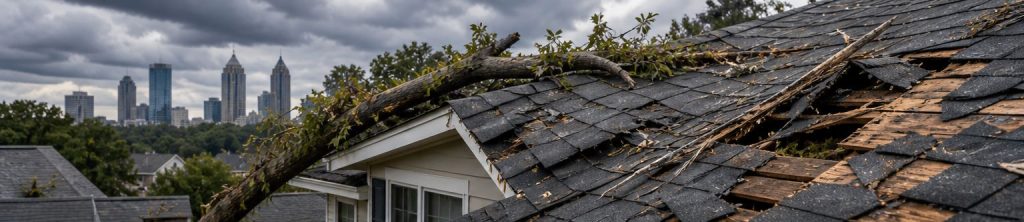
Atlanta storm season brings severe weather that can cause serious damage to residential and commercial roofs across the metro area. High winds, large hail, and falling debris are the most common culprits – and storm damage roof repair in Atlanta GA is one of the most urgent services we provide at Velocity Roofing. If your roof has been hit by a storm, acting quickly is critical to preventing secondary water damage inside your home.
Why Atlanta Roofs Are Especially Vulnerable to Storm Damage
Atlanta sits in one of the most active severe weather corridors in the Southeast. From spring hail storms and derecho wind events to late-summer tropical remnants, Metro Atlanta homeowners face a wider range of storm damage scenarios than most U.S. cities. Gwinnett, Fulton, Cherokee, and Cobb counties regularly appear on Georgia’s most storm-affected lists – meaning if you own a home in North Atlanta, storm damage is not a matter of if, but when.
Common storm damage patterns in the Atlanta area include:
- Hail damage: Hailstones as small as 1 inch can crack shingles, dent flashing, and strip granules – dramatically shortening roof lifespan even when damage is invisible from the ground
- Wind damage: Sustained winds above 50 mph – common during Atlanta thunderstorms – can lift shingle tabs, tear flashing, and expose roof decking in minutes
- Falling debris: Atlanta’s dense tree canopy means fallen limbs and whole trees are a major source of roof punctures after storms
- Ponding and drainage failure: Heavy rainfall can overwhelm gutters and flat-roof drainage systems, accelerating membrane failure on commercial properties
Step 1: Stay Safe and Assess from the Ground
Do not climb onto your roof immediately after a storm. Wet surfaces, hidden structural damage, and loose debris make post-storm roofs dangerous. Instead, do a visual assessment from the ground and look for:
- Missing, lifted, or visibly damaged shingles
- Granules washed into gutters or downspouts
- Damaged or bent gutters and fascia
- Fallen tree limbs or debris on the roof
- Visible dents in metal flashing, vents, or ridge caps
Also check your attic for daylight coming through the roof deck or signs of fresh water intrusion on insulation or rafters.
Step 2: Call for Emergency Tarping if Needed
If you have a visible hole, missing section of roof, or active leak, call a licensed roofing contractor immediately for emergency tarping. Leaving a compromised roof exposed – even for 24–48 hours – can allow water to damage your attic insulation, ceiling drywall, and structural framing, significantly increasing your total repair cost.
Velocity Roofing provides 24/7 emergency roofing services across Atlanta and surrounding North Metro communities. We respond fast and secure your property the same day.
Step 3: Document Everything Before Repairs Begin
Before any repair work starts, photograph and video every area of visible damage – both exterior and interior. Good documentation is critical for your insurance claim. Capture:
- Wide shots of the overall roof from multiple angles
- Close-up shots of damaged shingles, flashing, and gutters
- Interior photos of any water staining, wet insulation, or ceiling damage
- Fallen debris with context showing where it landed
Step 4: Contact Your Insurance Company
Most homeowner insurance policies cover sudden storm damage. File your claim as soon as possible – most insurers require timely reporting. Reference your policy number and the date of the storm, request a claims adjuster visit, and ask specifically about coverage for emergency repairs such as tarping and temporary protection.
Velocity Roofing works directly with insurance adjusters on storm damage claims across Atlanta GA. According to the Insurance Information Institute, acting quickly and documenting thoroughly leads to faster, more complete claim settlements.
Step 5: Get a Professional Storm Damage Inspection
Hail damage in particular is often invisible from the ground but causes serious long-term damage to shingle granules and underlying materials. A licensed inspection is essential – both to understand the full extent of the damage and to provide your insurer with documentation that supports your claim. The National Roofing Contractors Association recommends a professional inspection immediately after any storm event.
Understanding Hail Damage: The Hidden Risk
Of all storm damage types, hail is the most misunderstood. A hail strike leaves a bruise in the shingle mat – compressing the granules and weakening the asphalt layer beneath. From the ground, the roof may look completely intact. But the shingle’s ability to shed water and resist UV degradation is already compromised.
Left unaddressed, hail-damaged shingles fail faster, void manufacturer warranties, and allow slow leaks to develop over months or years. Key signs a licensed inspector looks for:
- Circular bruising or soft spots on the shingle surface
- Granule loss concentrated in random impact patterns
- Dents on metal components – ridge caps, vents, gutters, and step flashing
- Cracked or fractured shingles at point-of-impact locations
Common Storm Damage Mistakes to Avoid
- Waiting too long: Water damage compounds quickly. Act within 24–48 hours to limit secondary damage.
- Hiring an unlicensed contractor: Storm chasers follow severe weather events from city to city. Always verify licensing and ask for local references before signing anything.
- Signing anything before your adjuster visits: Do not sign an Assignment of Benefits or any repair authorization until your claim is fully assessed and approved.
Frequently Asked Questions About Storm Damage Roof Repair in Atlanta
How long do I have to file an insurance claim after storm damage in Georgia?
Most Georgia homeowner policies require you to report damage within a reasonable time – typically one year from the date of the storm, though some policies are shorter. Filing sooner is always better. Delayed claims are more frequently denied due to questions about the cause and timing of damage.
Can I stay in my home after storm damage to the roof?
It depends on the extent of the damage. If the roof is structurally compromised or water is actively entering the living space, it may not be safe. In most cases, emergency tarping stabilizes the situation enough for you to remain in the home until permanent repairs are completed.
Will filing a storm damage claim raise my insurance premium?
Filing a single weather-related claim typically has less impact on premiums than filing multiple claims. Georgia law provides some protections for homeowners in areas affected by widespread storm events. Consult your insurance agent for specifics based on your policy and carrier.
Fast Storm Damage Roof Repair Across Atlanta GA
Velocity Roofing is your local storm damage specialist – licensed crews ready to respond across North Metro Atlanta. We handle emergency tarping, full damage assessments, insurance documentation, and complete roof repair or roof replacement from start to finish. Request a free inspection online or call 404-999-ROOF (7663) for same-day storm damage response.